Monday, March 05, 2007

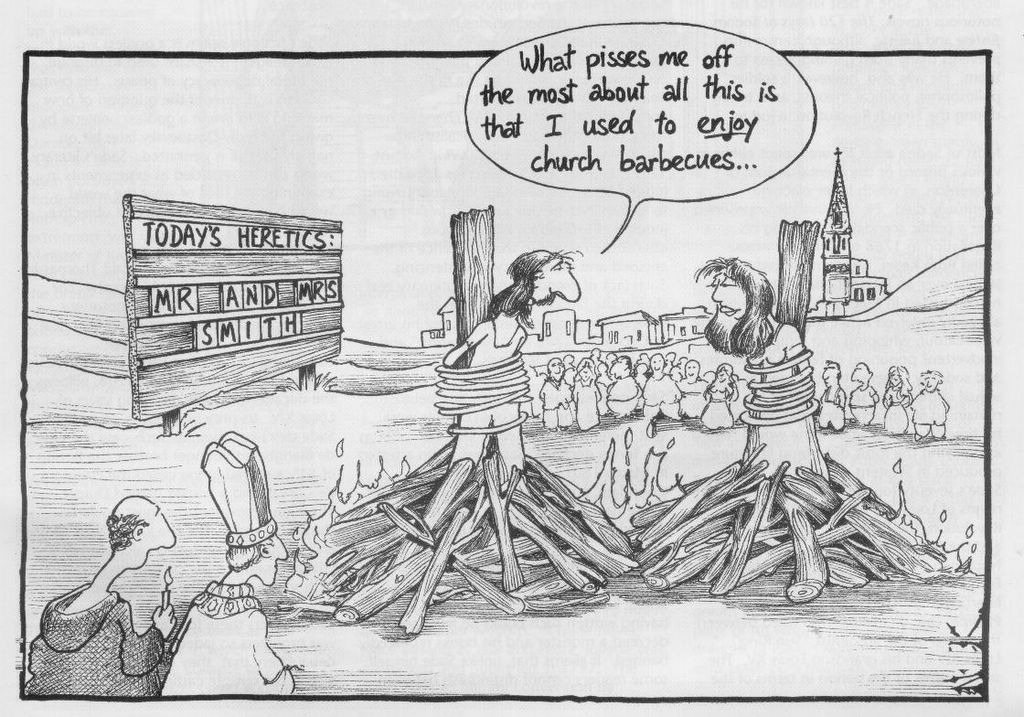
Hell


Hell
Originally uploaded by Jack Scoresby.
For TFR74?

Friday, January 26, 2007

Falufulu Fisi: "The main problems with the IPCC report were..."

The main problems with the IPCC report were the heavily reliance in statistical inferences techniques being used. The whole report is full of those models. Causations are still completely illusive & exclusive from those models being published in the IPCC report. There is no single model in the IPCC report that has established a direct or indirect causation between CO2 and Global average temperature and everything are inferences.

Causation modeling techniques which are widely adopted in Physics & Engineering establishes a flow-diagram of causes & effects, which are what the 'laws of physics are basically about', in a chain relationship of variables such that a cause 'x' produced an intermediate effect 'y' which in turn acts an intermediate secondary cause to produce an intermediate secondary effect 'z', which it then acts as a third intermediate cause to produce third intermediate or final effect 'w', and on, and on, ...

Here is a simple open loop of a causation diagram of the above example (common terms used by engineers & physicists is called block-diagram).


x --> y --> z --> w


Climate physical realities are not open loop as above but a dynamical feedback close loop system as one of the possible structural variable relations shown below:

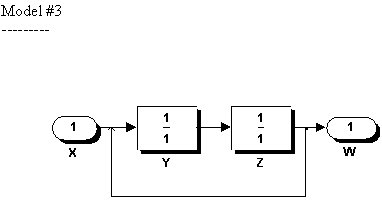

All the causation models depicted above (if my diagrams will be parsed & drawn exactly as I post this message) established a cause & effect between input X which is the 'cause' and output W which is the effect. The intermediate variables Y and Z are unobservable, the only observables are X and W, while Y and Z are not visible to us.

FACTS:
-----

#1) In black box statistical inferences modeling you have something like this:

x --> ? --> w

The question mark depicted in the above diagram establishes nothing about the physics (ie, cause & effect) , it is just pure induction of trying to correlate cause 'x' & effect 'w'. The question is where is the physics?

We do have the data for both X & W (cause-&-effect), but we know very little or nothing else of what are the intermediate steps between input X (cause) and output W (effect) in a climate dynamical systems. Also we know nothing about of which structural variable relation as depicted in Model #1, Model #2, etc, of which is the correct ones, even if the unobservable variables Y and Z have been identified.

#2) All the structural variable cause-&-effect relations depicted in Model #1, Model #2, Model #3, and so forth above could be functionally THE SAME. This means that you could apply the same input (cause) X and output (effect) W in to the dynamical systems to be modeled which fits the data to a high degree, however selecting which of the 5 models , ie, Model #1, Model #2, and so forth that fits physical reality (causality) is another different matter, which is still unknown today. This basically says that there are many possible causation models that fit the data, but only one will represent physical processes that govern the climate dynamics and this single process has not been identified yet.

Important Notes:
----------------

a) The variable structural relations depicted in Model #1 to Model #5 are not exhaustive, I could have come up with more, but I think 5 are enough to make my point. I also used 4 variables for simplicity, where as in reality the number of variables is huge, where most of those are still unknown.

b) Any of Model #1 to Model #5 is called a 'dynamical system' or 'closed-loop feedback or feed forward dynamical system'. Currently it is not known how many of such systems are there in climate dynamical systems. The other point is, scientists have no idea of how these independent 'closed-loop feedback or feed forward dynamical systems' are structurally related to each other. Some of these sub-systems are coupled to each other. The atmospheric systems & oceanic systems have now been coupled together in a still yet simplistic model by climate scientists.

c) Model #1 to Model #5 are SISO (single input - single output), which I simplified to make my point clear, but in reality, climate is MIMO (multiple input - multiple output).

d) If you have a huge number of potential climate variables, where the majority are to be discovered and a huge number of independent 'closed-loop feedback or feed forward dynamical systems', then image how complex when you hook-up each and every variable and every closed-loop system to form a one holistic climate earth systems and this is what you call PHYSICS.

Now, if anyone thinks that Falafulu is a nutter & denier, please read what this NASA sponsored workshop proposed in improving the climate modeling by adopting physics of causations rather than black-box statistical inferences.

"WORKSHOP ON CLIMATE SYSTEM FEEDBACKS"
http://grp.giss.nasa.gov/reports/feedback.workshop.report.html

The person who chaired the workshop above was Dr. Rossow of NASA and here is one of the first peer review papers to be published relating to the problems in climate modeling which they raised during the workshop. Here is Dr. Rossow's paper, I recommend that you read the problems he cited in his paper , just skip the mathematical derivations part, and concentrate on the non-math part which still makes it readable to non-expert in math’s or engineering.

"Inferring instantaneous, multivariate and nonlinear sensitivities for the analysis
of feedback processes in a dynamical system: Lorenz model case-study"
http://pubs.giss.nasa.gov/docs/2003/2003_Aires_Rossow.pdf

If you're curious about the theory behind feedback dynamical systems, then here is some diagrams from wikipedia to take a peek at.

"Control theory"
http://en.wikipedia.org/wiki/Control_theory

Wednesday, December 14, 2005

Blogs aren't effective?

Joe, you say of "the 'blog' phenomena... I view them as the opposite of the capital accumulation idea. This isn't to say they aren't worth doing, or they aren't effective. They certainly can be effective in terms of activism. But they violate the principle of not consuming all your time in maintenance."

I don't agree. I have to say, I think this shows a fundamental misconception of the nature of blogs. It really depends on the blog and what you wish to do with it.

First of all, if you have a blog and you're doing it properly, a blog takes no more work than it takes Tibor, for example, to write a piece a day - and in fact the process of regularly writing a piece a day helps automatise both the skill and the habit of writing. The more you write, the better at it you become; blogs give you a strong incentive to get better, and to write more. Producing a daily article or three becomes easier the more you do it.

So blogs help produce writing that would otherwise not exist.

But you're not really accumulating 'capital,' you say? Well, you are if you're doing it right, say I. Over time, as you write pieces and commentary on daily events, you build up a valuable resource that can be and is drawn on for later pieces. No point in saying something anew when you can simply quote what you said on a similar topic previously. And the more you write, the more you can quote.
In fact, the more you write, the more 'capital' you have to 'categorise' and 'tag.' Once you begin 'tagging' your writing by subject heading, and even collecting together all your own writing across the web on the basis of its subject heading, it doesn't take long before you build up a nest-egg of pieces on a range of topics.

For instance, the Categories that collect the writing from my own blog 'Not PC' now boast 108 posts on Architecture and Urban Design, 15 on Common Law, 103 on Property Rights, 63 on Education and 107 on or related to Economics -- and even 136 pieces on or related to Objectivism! -- and all produced since I began the blog last April as a way of intellectual activism ideally suited to the Objectivist activist in New Zealand: the communication of passionate art and rational ideas to those who desperately need them.

So there's an enormous amount of 'capital' right there already, right?

And once categorised and collected,whose to say what these pieces might be used for later? Even on the net as they are already they're a wonderful example of 'capital accumulation' with nary any maintenance whatever, there to be used and referred to regularly. But this is 'capital' that can be invested in future projects, for even more 'capital accumulation.'

The collection of pieces on 'Cue Card Libertarianism' for instance, begun by Lindsay Perigo back in 1993 and progressively updated at my blog, cry out to be collected in book form once the updating is completed, perhaps supplemented with any one of the 257 pieces I've written since April on the subject of or related to Libertarianism.

So I just don't understand this idea that blogs are somehow profligate wastes of time and energy. If you're doing it right, nothing could be further from the truth.

To say that writing and producing blogs posts is inefficacious as a form of activism or of 'capital accumulation' is like saying Rand's own articles for the The Objectivist and the Objectivist Newsletter were inefficacious, since there was no capital accumulation, and the value of the effort diminished over time. This on its face wold be ludicrous, and would ignore the enormous pay-off from her investment, not just in the greatly expanded clarity of her own thinking in writing these many wonderful pieces, but also, for example, in providing the material for the many collections of these non-fiction essay that we all now enjoy.

Tibor's own articles provide another example of good capital investment: many of Tibor's best articles can be found collected and lightly edited in many of his own books -- his investment in writing his regular articles pays off by producing material and ideas he can then publish in book form.

"How about maintenance?" you say. "[Blogs] certainly can be effective in terms of activism. But they violate the principle of not consuming all your time in maintenance."

As I said above, if you do it right this is just not so. And you yourself "admit the [RoR] site requires a lot of maintenance work." A blog, if you're doing it right, requires little more maintenance than writing something for the front page of SOLO or RoR. And I doubt that you'd call that a waste of time.

Thursday, September 29, 2005

Pop star or porn star? Guess right and you get fifty points. Guess wrong and, well, you still haven't really lost now have you.

A great game for a Friday night. Linked game here. Posted by Picasa

Monday, September 26, 2005

 Posted by Picasa

Monday, July 25, 2005

An Election Day Practice Ballot Posted by Picasa

Tuesday, July 19, 2005

Frank Lloyd Wright: Stained glass windows from Avery Coonley Playhouse, 1912 Posted by Picasa

Friday, July 01, 2005

It's not Alastair Campbell Posted by Picasa

Tuesday, June 28, 2005

Photo by Brett Holverstott of Stuart Mark Feldman's sculpture group, The Future In Our Hands. Review of the landmark sculpture by Michael Newberry here. "It is a brilliant achievement," says Newberry, "not only in the sense that it is a realization of the artist's ecstatic vision, but it also holds the exalted place of being an innovative work in the history of art." Posted by Hello
Cartoon by Nick Kim, courtesy of The Free Radical. Posted by Hello

Monday, June 27, 2005

'El Canal' by Capuletti Posted by Hello

Friday, June 24, 2005

Hah! Who doesn't like demolition? Posted by Hello

Sunday, June 19, 2005

'Icarus Landing,' Michael Newberry Posted by Hello

Tuesday, May 24, 2005

 Posted by Hello

Thursday, April 21, 2005

RMA is permissive? Yeah, right.

"Property developers could face more hurdles in getting large new projects approved after a Supreme Court decision this week," says Resource Management Act (RMA) specialist Richard Brabant this morning.

Like they need more hurdles, right? And who pays when every new hurdle adds costs? You can answer that one yourself, can't you.

According to the RMA's cheerleaders, the RMA is en example of "permissive legislation." That's what ACT's Ken Shirley said at the time. Further, the RMA does not allow anti-competitive behaviour said the cheerleaders.

Well, tell that to Josephine Grierson and the tenants and customers at the Fox outlet shopping centre in Northcote; it is the Resource Consent for this project that the Supreme Court has turned down. The Resource Consent was in the Supreme Court because shopping mall giant Westfield objected to another shopping centre down the road from their own.

The RMA is permissive. Really?
And it prohibits anti-competitive behaviour. Yeah, right.